A London-based premium private hire company operates a large fleet of professional drivers across the city. The existing Driver App was the central tool through which drivers received jobs, tracked earnings, and communicated with support — yet it was failing at all three.
I was brought in to diagnose the problems and redesign the product end-to-end — navigating a complex stakeholder ecosystem of call center agents, operations staff, and passengers, while keeping the driver at the centre. They are the only people customers ever actually meet, and without them, there is no business.
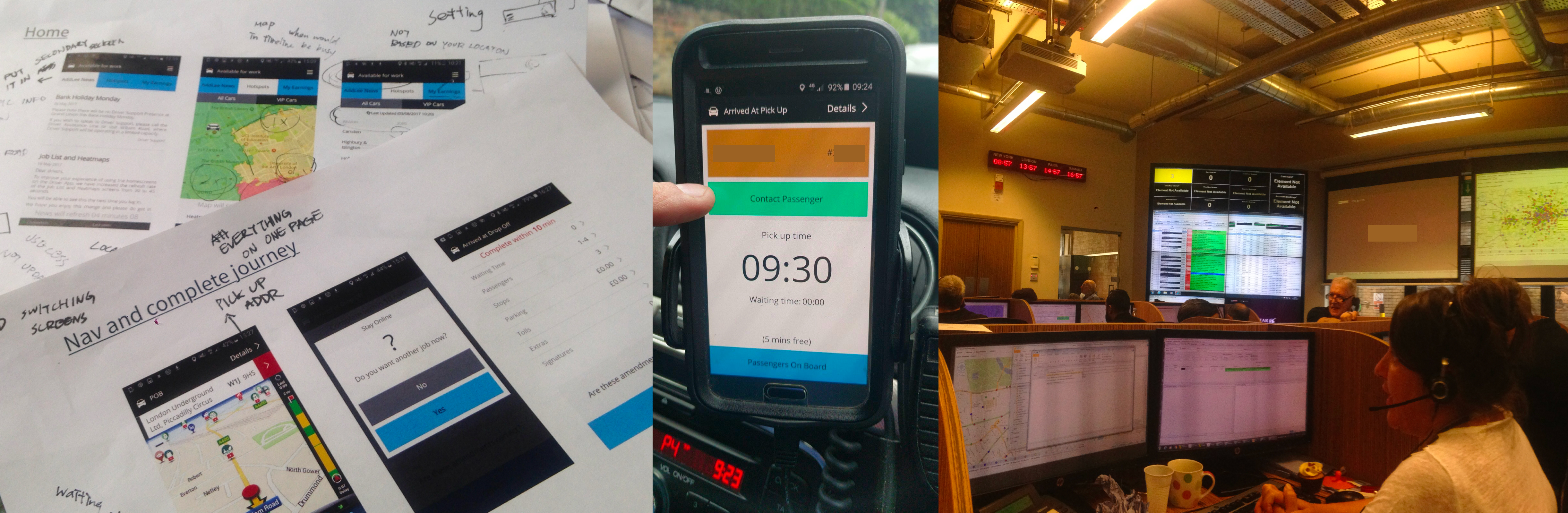
I got in cabs with drivers, sat with call center agents, attended driver training, and read through App Store reviews to understand where the experience was breaking down.
Shadowing the operations and support teams was equally important — drivers don't exist in isolation, and understanding the full ecosystem was the only way to design something that worked for everyone in it.
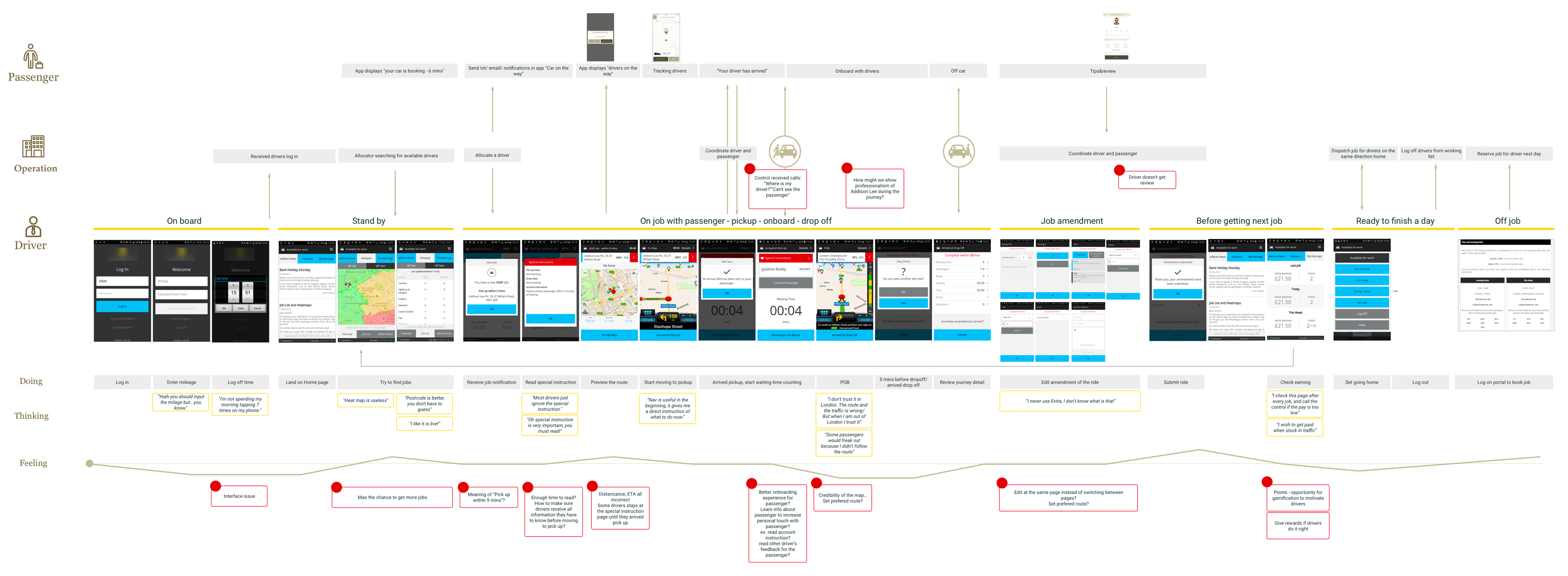
Mapping the journey across three actors — Passenger, Company, and Driver — made one thing clear: the problems weren't isolated. Every time a driver struggled, it created a ripple through the entire system.
Almost every step of the core on-job workflow carried a pain point. The redesign couldn't be a collection of individual fixes — it needed a strategy that addressed the underlying causes.
"I am not spending my morning tapping 7 times on my phone."
"Heatmap is useless."
"Postcode is more useful, you don't have to guess."
"Some passenger would freak out because I didn't follow the route."
"I check this page after every job, and call the control if the pay is too low."
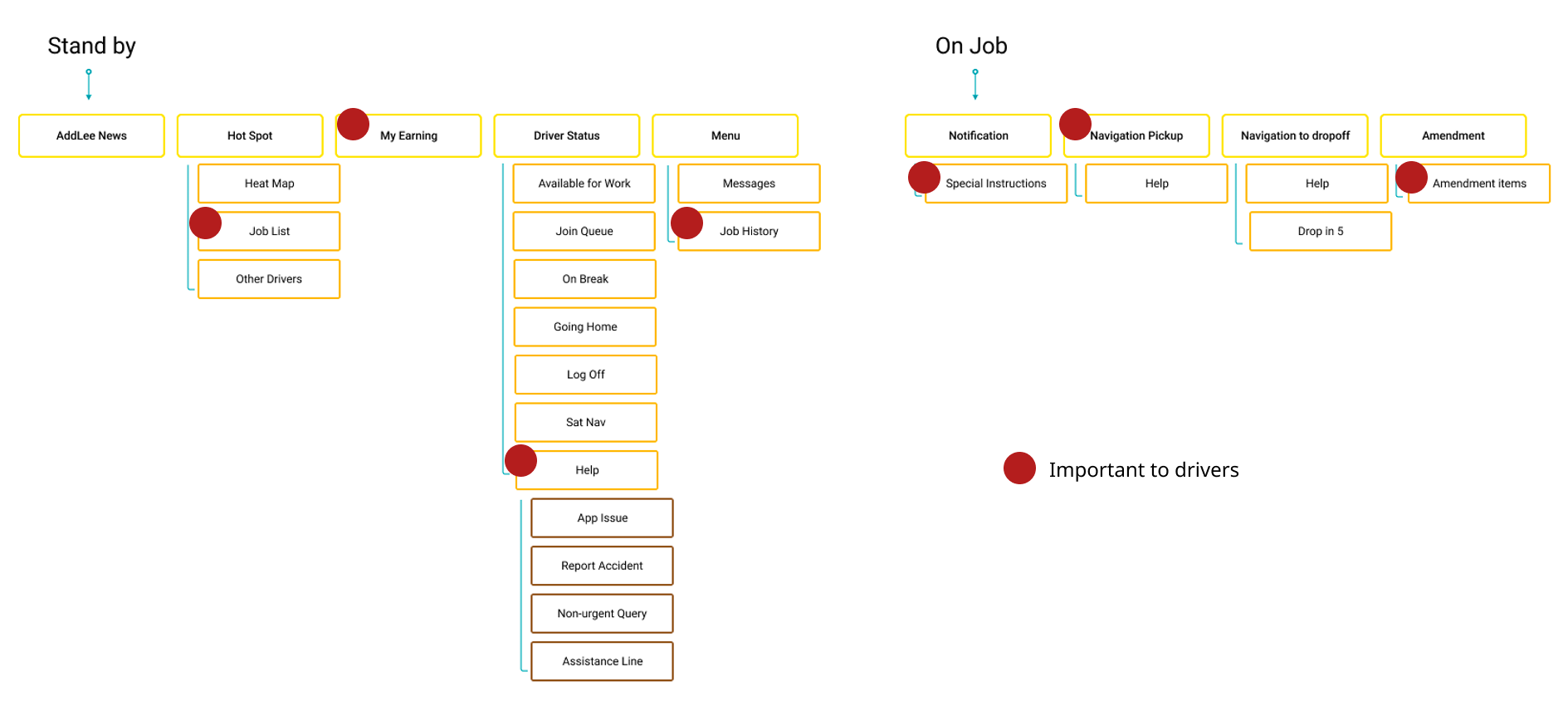
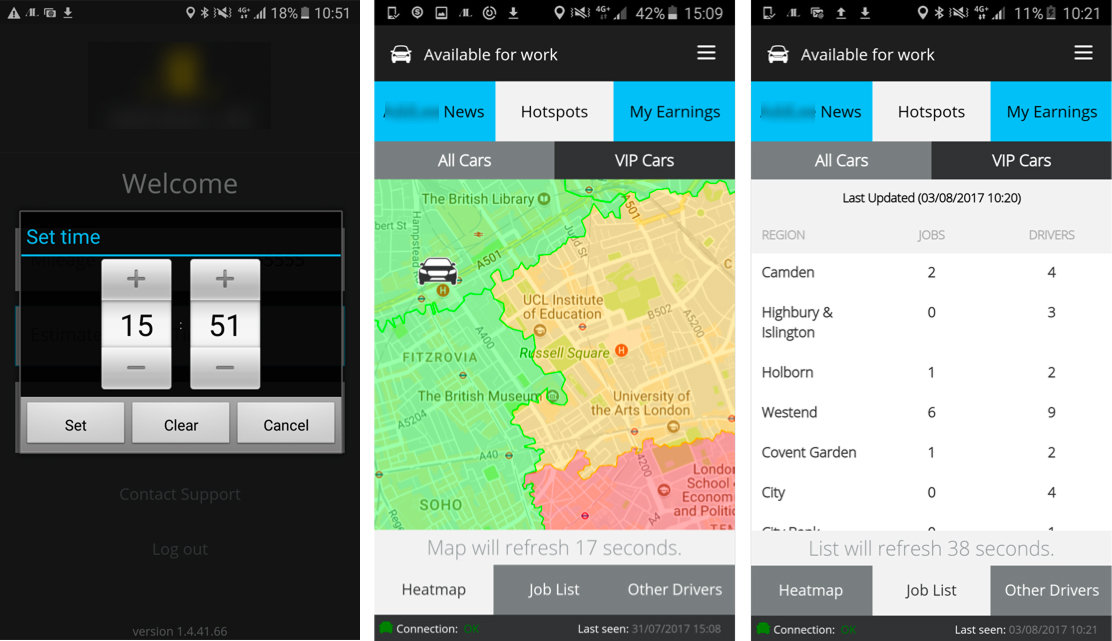
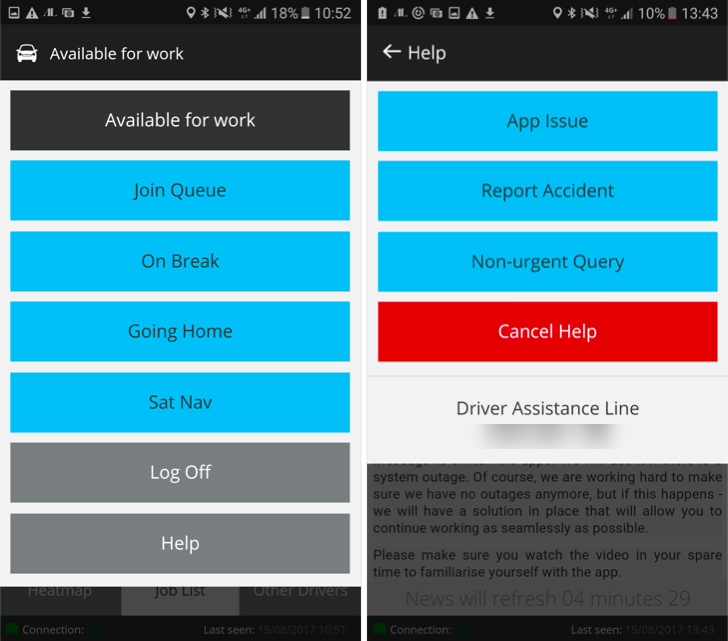
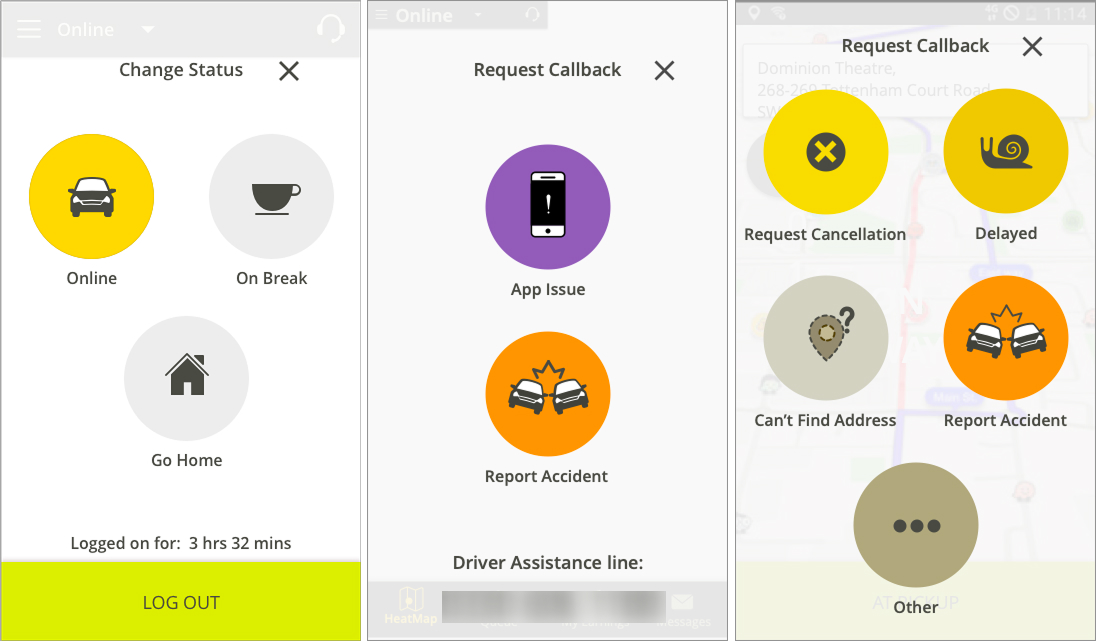
The landing page was a news feed that nobody read. The most important section — the Job List — required two taps to reach. Help and Job History were buried in a hamburger menu that mixed critical and trivial functions together.
Different UI patterns coexisted without coherence. Colours carried no consistent meaning. Red appeared for both errors and standard buttons. Drivers couldn't glance and act.
The built-in map was unreliable and drivers didn't trust it — so they carried a second phone purely for navigation.
Frequent crashes during the most stressful moments — arriving at pickup, submitting amendments — destroyed driver trust and increased support call volume. Instability was both a technical and experience problem.
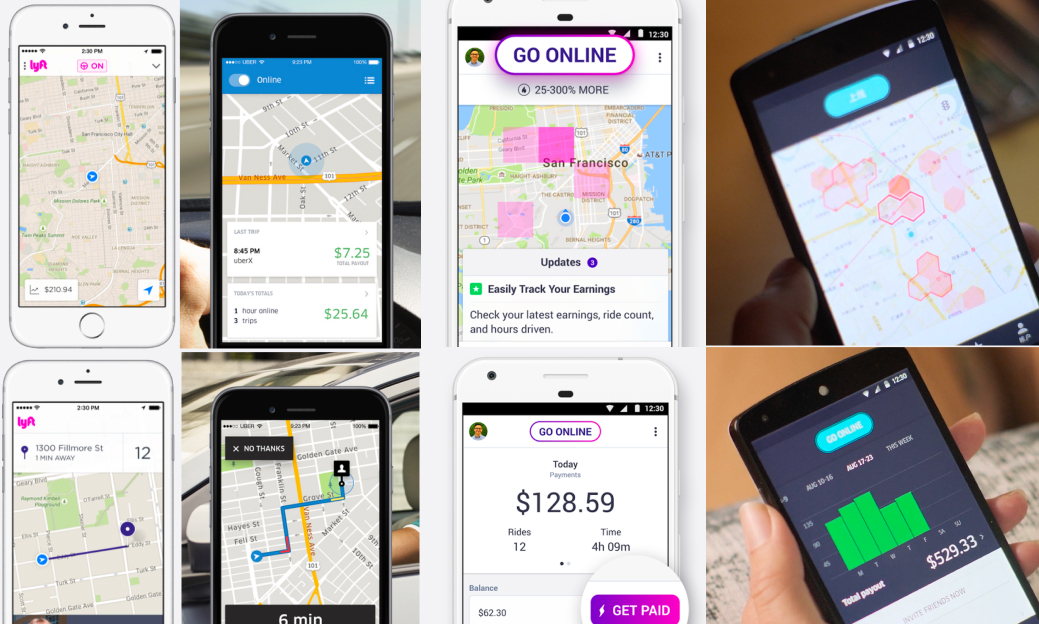
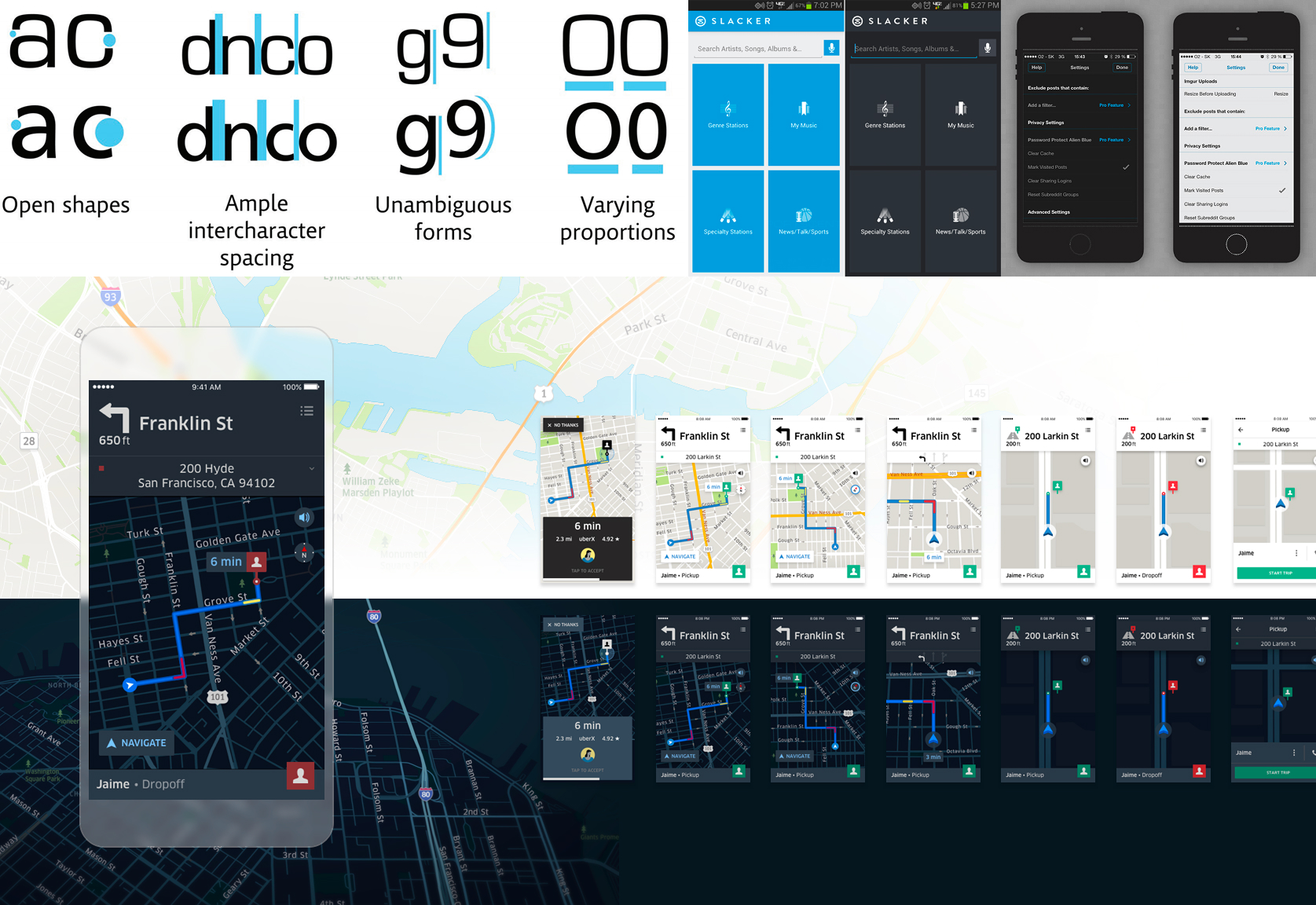
I benchmarked leading ride-hailing driver apps across three areas: exploring jobs, the pickup experience, and earnings. Both had solved glanceability far more effectively than our app — letting drivers act without reading.
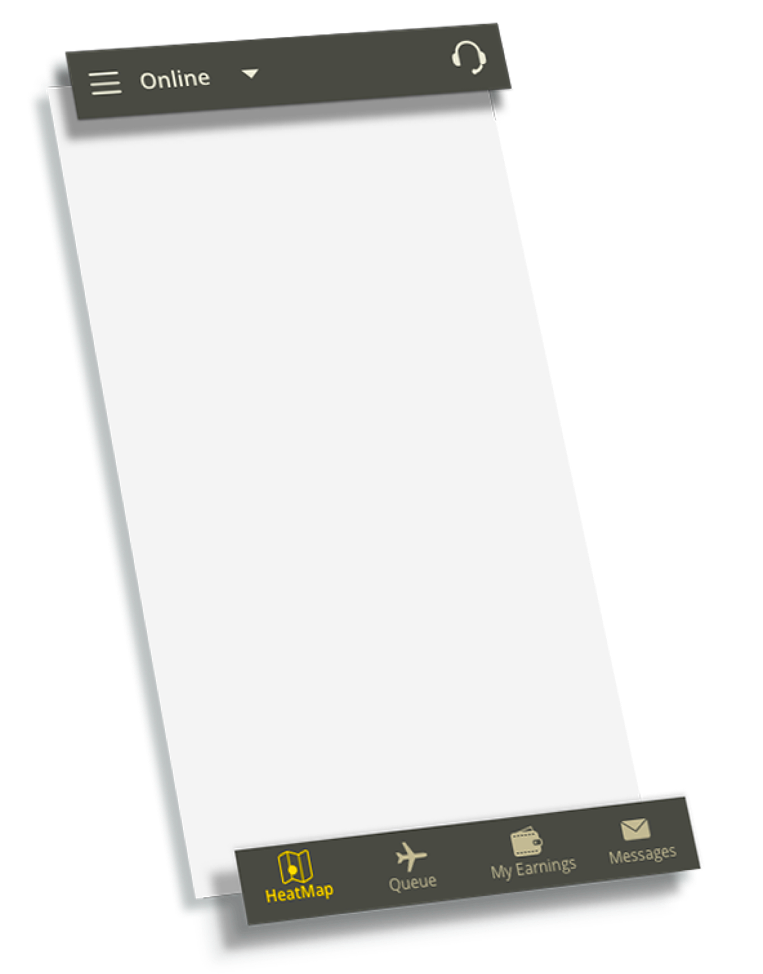
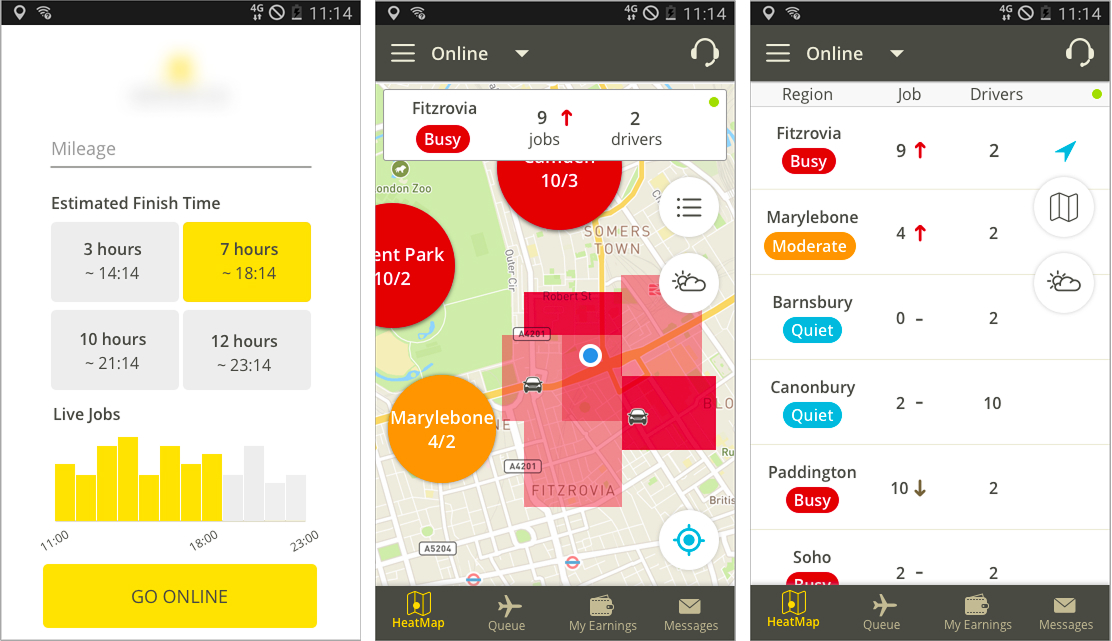
Make the most important information immediately accessible within 3 taps. Navigation should reflect what drivers actually care about: jobs, earnings, and communication.
The interface should work for drivers. Every element is recognisable at a glance, readable in a second, tappable with one thumb.
Standard patterns reduce cognitive load; consistency builds trust.
Help drivers achieve their goals — more jobs, better pay, stronger ratings — by surfacing the data the system already holds. Drivers shouldn't have to guess what the company already knows.
Evolve, don't revolutionise — familiar enough to trust, refined enough to work.


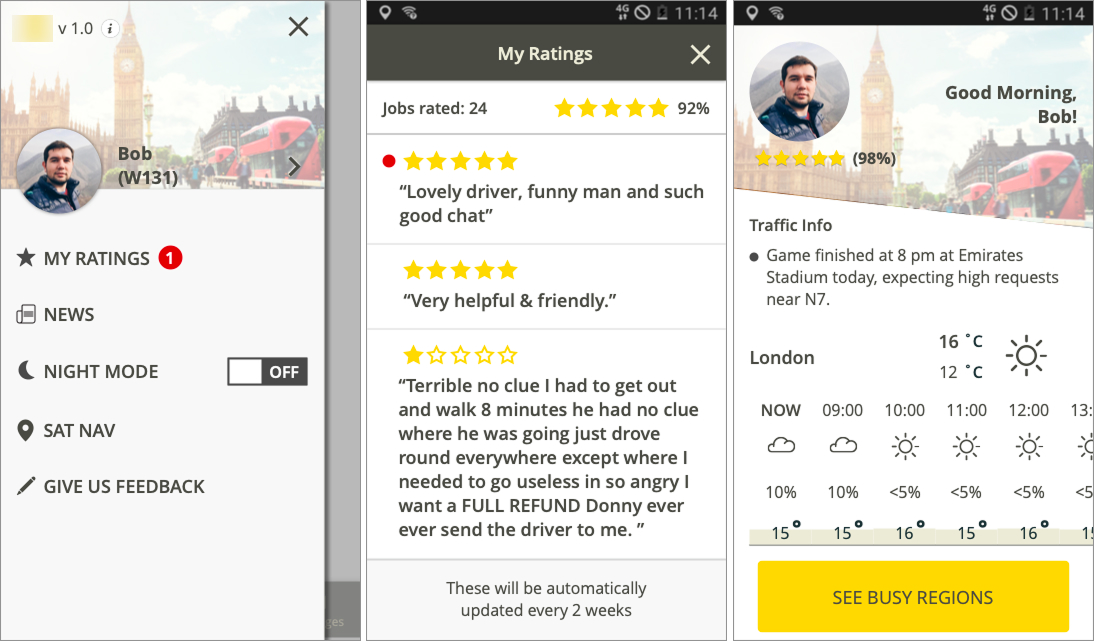
"I would love to see my reviews from customers, either good or bad, so I can improve my job."

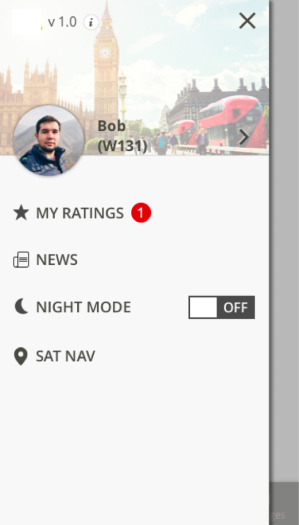
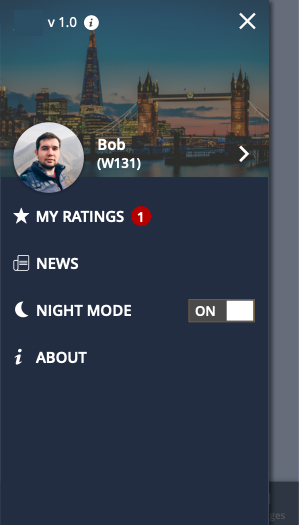
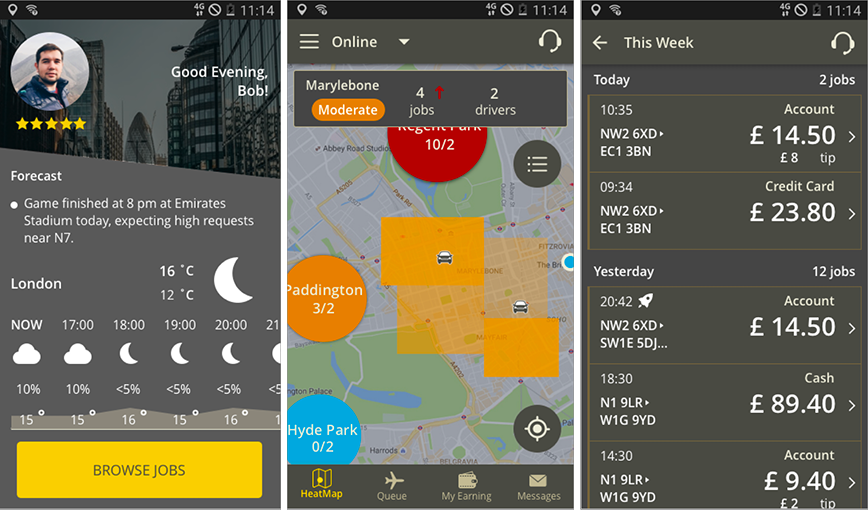
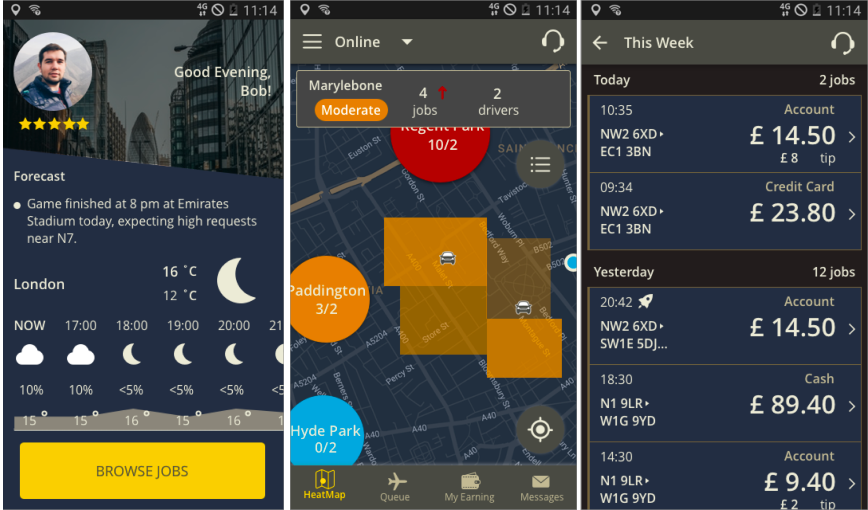
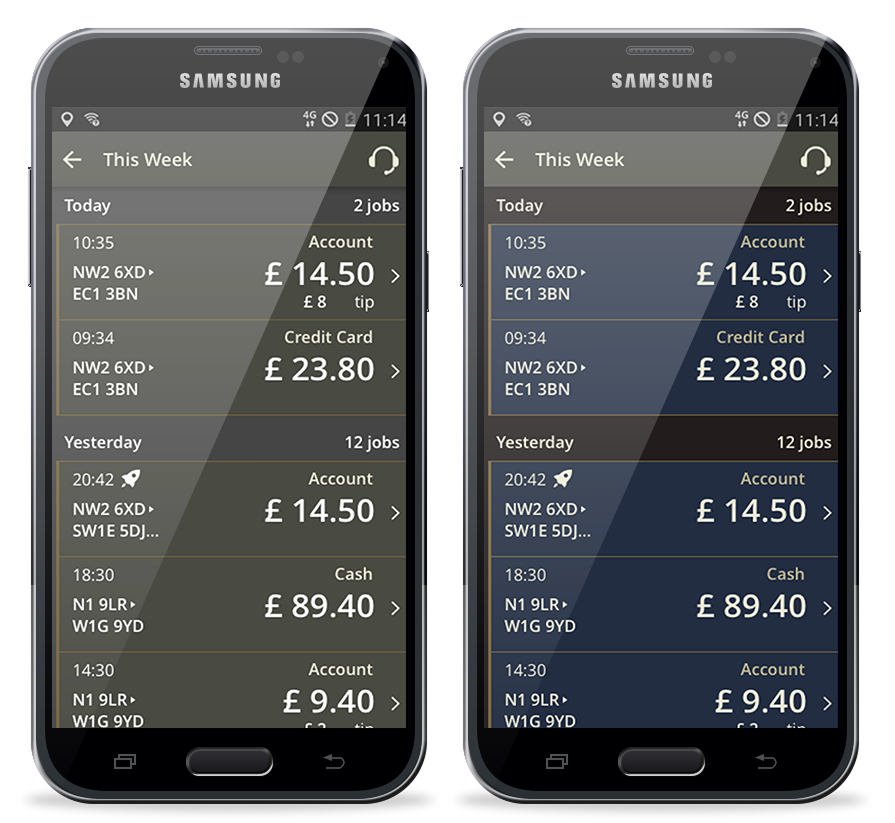
Many drivers work nights. Bright white screens cause eye strain and reduce night vision — and drivers expressed a clear preference for a darker interface even during the day.
Effective dark mode: low saturation, reduced contrast, and typography that holds legibility in low light.
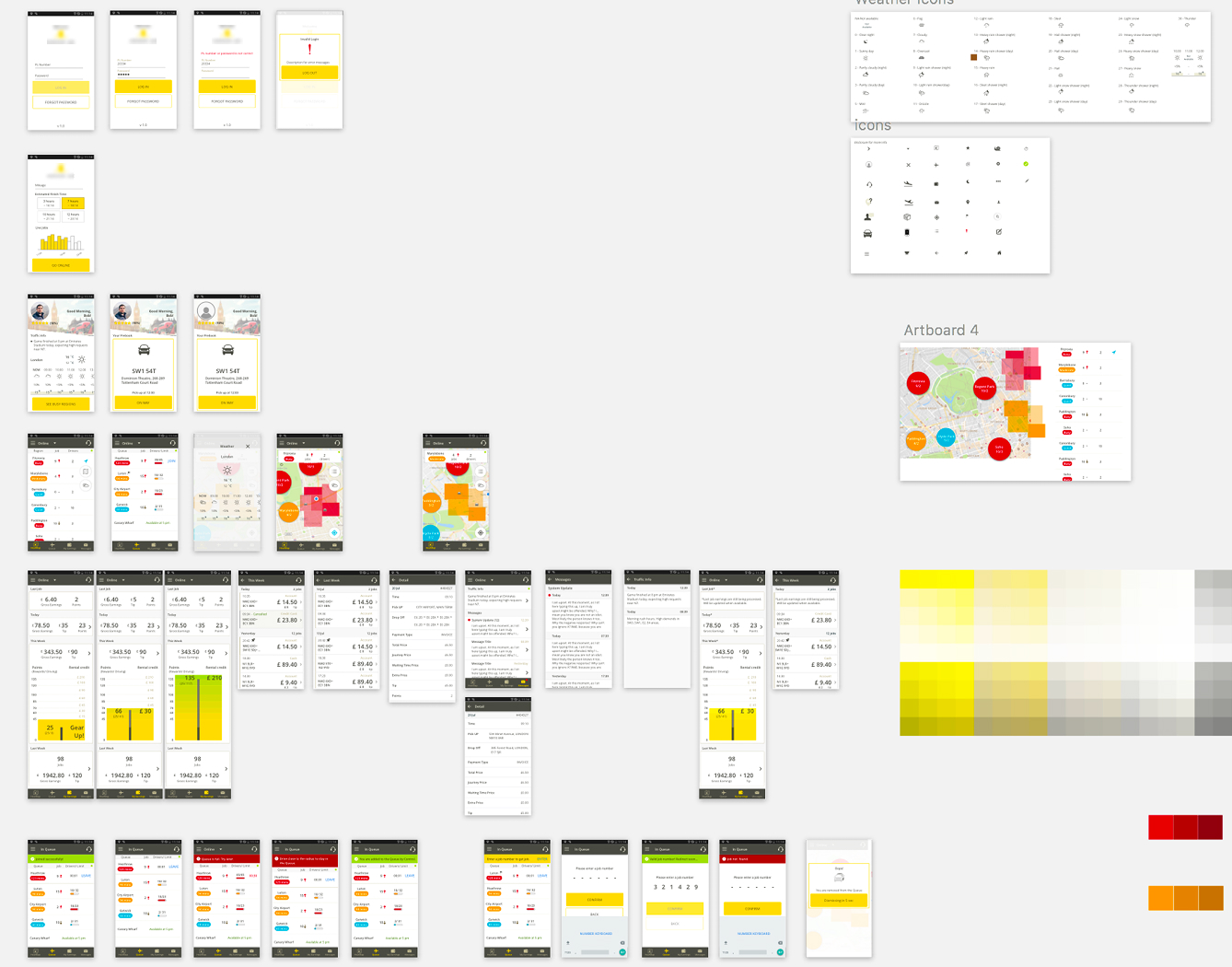
Two dark mode palettes explored — a warm neutral grey and a cool navy blue.


"Chia will deep dive into the user experience and drill down any pain points. She spent hours with our drivers and couriers (even on a motorbike) to make sure she understood their day to day. She always puts user experience first and is not afraid to take risks. Her ideas for new features really blew some of the team's minds, and the elegance in which they were delivered was astounding."
— Product Manager, Driver App Project
"When can I get it?"
— Drivers, every time we met